
I recently had an opportunity to write a blog for the popular “Writers Who Kill” website. Happy to share it with you now.
***
How Do You Find Your Story?
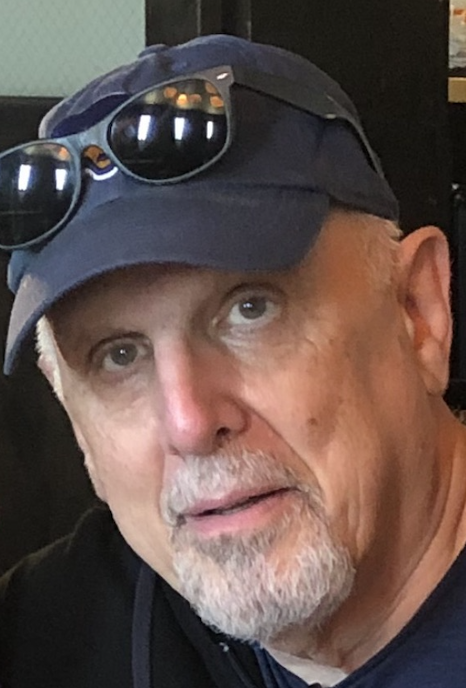
By Michael Geczi
Authors regularly get asked the same question: “Where/how do you come up with the story?” I like responding; it helps me fine-tune the process and, hopefully, improve.
I’m a pantser. Have some planning genes, but I get bored quickly and shortchange intricate plotting. Which is not to say there isn’t some structure involved.
Anyway, not sure if I fall into the minority, majority, or some small extreme, but I spend time with my potential main character first. Each of the MCs in my “Serial Killer Anthology” approached me and said, “We need to talk.” We did, often at length. I maneuvered them. They maneuvered me, which is interesting and valuable. I tried to get a sense of whether they might be playing me and whether that might bring us to a confrontation in Act Three.

The wonderful Elmore Leonard said he “loved to make up characters and gradually build a story around them,” as they essentially “auditioned in the early scenes” and sometimes ended up with a larger role. (It’s great to have a collaborator, yes?) My “Santa Monica Homicide” collection is exactly that.

Given my focus is psychological thrillers, this first meeting is enlightening and an adventure.
Do they have a fault line that I can use? Is it obvious and already there? Or do I have to manufacture it or draw it in and, even there, will it be credible?
Do I find this person interesting? Will I fall in love with them be able to “disappear” them or turn them into a hero at some point (because I haven’t the slightest idea at this early stage).
And then there’s always the unknown: is this character capable of surprising me later, as in “two-thirds in will he or she still be the right fit for the scene I have planned for that day?”
These early characters tend to be female, at least at the beginning. That may not continue, however. Why? More interesting, more flexible, more resourceful.
Good enough for me if it’s also good enough for Richard Ford, who calls characters “unfixed, changeable and provisional … I can change them at will, and do.”
They tend to be a familiar face from a previous book. I know them, but not everything. Seems like an opportunity to explore, and what could be better than that?
I wonder what they have been up to – whether it’s interesting or just the passage of time – and would it be credible or logical for them to play a major role in a new adventure.
Admission: this is the point where I start to get concerned about “putting the same people through a similar adventure as last time” and start to create plot scenarios in my head.
· The victim becoming the offender.
· The unlikeable protagonist and the likeable antagonist.
· The extraneous character who inserts herself into the mystery.
· The faulty memory that shapes an entire life.
· The role of revenge and how it can play out differently.
· Endings that catch the bad guy, or endings that surface the motivation.
· Experiment with structure and try something new. (Check my latest, “Damaged.”)
%20(002).jpeg)
And then I consider locations, and how they could function in different locales. Los Angeles is not New York, and neither are Cape Cod. Location significantly impact what they encounter, how they act, how they perceive others, and how they achieve or fail in their personal arc.
Dennis Lehane says, “Location is crucial to good writing. A strong sense of place fixes the action in the reader’s mind … without that … it doesn’t matter how strong your characters are.”
Which brings me to that other regular query authors encounter: “How many draft/rewrites/edits do you do?” My answer is always “as many as it takes to know – really know – that I’ve created the best story I can.”
It’s done when it’s done. I know when it is. I know when it isn’t.
Psychological thrillers offer endless opportunities to tell complex stories and enjoy myself in the process. I can break rules, twist tropes, create wonderful and hateful characters who interest me (and I feel I know), and generally skirt around violence without ever describing it in detail.
I invite you to check out my work.
***
Thank you for your continued support.
###

Leave a Reply